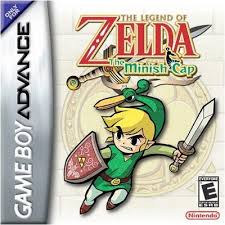
Name: The Legend of Zelda: The Minish Cap
Platform: Game Boy Advance
Number of Players: 1
Genre: Action-Adventure
ESRB Rating: E
Released: January 10 2005 (North America)
Developer: Flagship (Capcom)
Publisher: Nintendo
The Legend of Zelda: The Minish Cap is, despite largely positive critical success, one of the worst selling
Zelda games ever released. Though to be fair, when it comes to
Zelda games that’s not really much of criticism as it landed around 1.25 million total worldwide sales (
↑[1]). Still, with only the GameCube’s
Four Swords Adventure moving fewer units, where did
The Minish Cap falter?

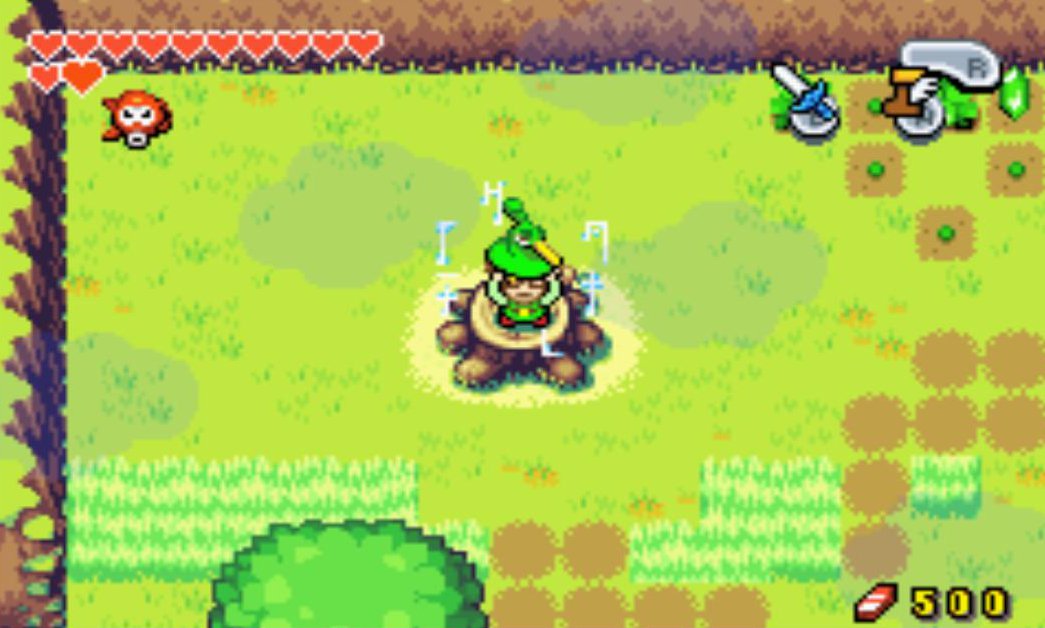
Like Oracle of Seasons and Oracle of Ages for the Game Boy Color, Minish Cap was developed by Flagship, a division of Capcom, rather than in-house at Nintendo. But despite this the game hasn’t lost the signature feel Nintendo have been crafting since the first Zelda released in 1987. The cell-shading art style is directly descended from 2003′s The Wind Waker and the gameplay, though introducing a new dynamic with the introduction of miniaturization as part of the puzzle-solving process, is still distinctly Zelda-n – what with the bombs, arrows, boomerangs, Pegasus boots, y’know, the usual. Part of the appeal of the franchise is its versatility; the ability to take the raw ideas from previous titles, combine them with new elements, and in turn create a unique incarnation. Ocarina of Time had… Well, time. Wind Waker had the open seas. And Minish Cap has a talking magical hat – think Harry Potter sorting hat – that shrinks you to minute size. It’s might seem somewhat of a departure from the typical Zelda-fare but the incorporation of tininess brings a fresh approach puzzle solving. You placed as a transient between the regular-sized world of Hyrule and the scaled down world of the Picori or Minish, a small yet influential people unseen to the standard sizers. The players job is to restore 4 elements to the master sword so that you may defeat Vaati who has petrified a helpless Princess Zelda and brainwashed the king. With the help of the talkative hat you find in the forest you travel the world using portals to switch sizes and conquering dungeons towards this end.

The core gameplay is as faithful as ever to what devotees have come to expect from the series. Go to the mark on your map, enter dungeon, get key item, vanquish boss, get heart, use item to access previous inaccessible area on map, repeat until completion. Predictable but still, after all the years and games, a very successful system of risk, reward, and motivation. The
Zelda game structure is based on increasing admittance to new areas in the game through recent achievements and
Minish Cap delivers on this twofold with new areas to access in Hyrule and the Picori realm. Hyrule town is especially full of new places to discover with the retrieval of each new item. Along with the dungeons, and the smaller quests that lead to each dungeon, there are hours of side quests to embark on. There’s the hidden items, heart container pieces, and countless favors Hyrulians and Minish ask of you, new additional side quests for this edition include trading “kinstones” with the inhabitants and collecting mysterious shells to trade in for prized collectors figurines. The kinstones prove to add a vast amount of depth to the game. You collect fragments of these stones from various parts of the land and fuse them with whomever has the other matching fragment. Successful fusion reveals secret areas and treasure chests to go and track down. Though the many, many fusion quests will require the stamina of a uber-adventurer, the obscurity of a few locations can make this process a little tedious but will certainly keep you busy.

The dungeons themselves are as innovative as ever, some even pull some ideas from previous games. Though there are the typical themes at play – mountain, forest, ice, etc. – and there are the usual items to find – maps, big keys, small keys, etc. – Flagship has managed to mix things up a little by introducing some unique settings and by moving around the procedure to completing the dungeons. The dungeons are somewhat more linear in
Minish Cap which some gamers may actually prefer as it avoids what used to be the inevitable confusion and backtracking. Instead what we have is a streamlined approach that requires very little repetition. The focal point of these dungeons is, as always, the formidable and colossal bosses, and even though
Minish is a small-screen adventure the bosses are no less monstrous. The dungeons at points can seem a little platform-y as opposed to action-adventure… -y, especially the Wind Palace; though there is still a great deal of strategy at every turn, some points rely a lot more on running, jumping, and good timing than problem solving. While this does reduce the difficulty level of the game overall, it also reduces the time you spend pulling out your hair looking for a solution to get out of a room. The mix is balanced evenly, and the innovation this blended platform-action-adventure approach brings is refreshing and avoids stagnation, and, let’s face facts, tears and tantrums.
Music and visual artistry are at there best in Minish Cap. Following in the footsteps of Wind Waker‘s visual style might have been a hasty move, especially considering the flack the GameCube prequel got – being perceived as “childish” despite glowing reviews – but the cell-shaded approach fits the Advance-sized adventure perfectly.
Some minor issues from Zelda games past have been resolved in Minish Cap. In Link to the Past rupees could be a little sparse, but here they are plentiful. In fact, they’re probably too plentiful, and as they seem to be a reward for most everything you’ll mostly likely find yourself wasting more cash that wisely spending it.
The Legend of Zelda: The Minish Cap is a worthy title in the series and hands down one of the most under-appreciated. As handheld manifestations go, excluding re-makes and re-releases, Minish Cap is arguably the best tiny Zelda adventure available. Compared to Link’s previous Advance adventure, a minimal rework of Link to the Past, the game is somewhat shorter, but considering the increased complexity of the game mechanics and graphics, the compromise is understandable. It’s not like you’re getting short changed either; Link to the Past is a bonafied console release, but also something you’ve played countless times before whereas, though Minish Cap is handheld only Zelda game, you’re getting something new and innovative that’s still true to the franchise. You’ll get a good 10 hours of play time from the cartridge with a view to many more hours if you’re looking for maximum completion. Despite being 5 years old, The Minish Cap is still a textbook example of what a handheld adventure should be.
So why the weak sales? The answer is simple yet unfortunately.
Minish Cap is simply the victim of bad timing. Thanks to the November 2004 release of the Nintendo DS, a device poised to change the handheld landscape, it was hard to garner support for a game seen as outdated from the get go. It’s a shame because
Minish Cap is a game that should be more widely played.
Score:
Sources:
- http://vgsales.wikia.com/wiki/The_Legend_of_Zelda
Images: